


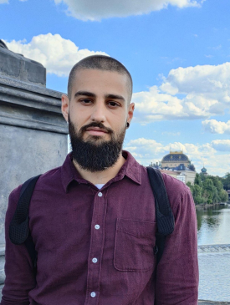
Leonardo Concetti
leonardo.concetti@student.unisi.it
Title of the project: “Working Memory in Sentence Processing: Encoding and Retrieval of Syntactic Units”
Supervisors: Vincenzo Moscati (Unisi, DISPOC), Luigi Rizzi (Collège de France), Shravan Vasishth (University of Potsdam)
I am a PhD student working in the Psycholinguistics Lab of the University of Siena. I am mainly interested in the relationship between language processing and other cognitive abilities, such as memory mechanisms. In my current project, I use behavioral methods such as self-paced reading and eye-tracking to investigate how we encode and retrieve syntactic units in/from working memory. Some additional academic interests include the biological foundations of language, linguistic theory and language acquisition.
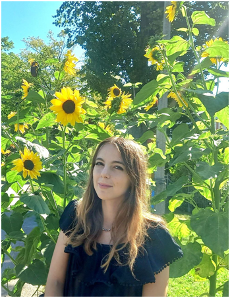
Valentina Pettosini
Title of the project: “The culturalisation of contemporary Chinese political discourse”
Supervisors: Davide Sparti, Luca Verzichelli (Unisi, DISPOC)
Valentina Pettosini is PhD student in the Social Sciences and Humanities program at DISPOC. Her research interests include political discourse, ideology, and intercultural relations. Valentina’s PhD research focuses on cultural narratives in contemporary Chinese official political discourse and the role of traditional culture in shaping socialism with Chinese characteristics. Valentina is also Deputy Director at the Centre of Excellence CREDO Cultural Relations and Diplomacy.
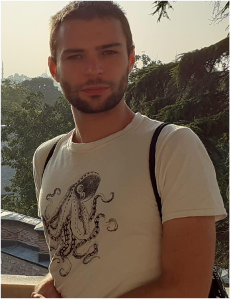
Michele Piccinetti
michele.piccinetti@student.unisi.it
Title of the project: “Unemployment Policies and the Outsider Vote: Determinants of State Decisions and Electoral Salience in Policy Development”.
Supervisors: Mattia Guidi, Luca Verzichelli (Unisi, DISPOC)
Michele Piccinetti is a PhD candidate at the University of Siena, specializing in social sciences, political economy, and public policy. His doctoral research focuses on the determinants of unemployment policy development and state choices in European welfare regimes. In the second part of his thesis, he analyzes voting intentions among labor market outsiders, particularly in relation to the salience of outsider-related policies in electoral programs. He also contributes to quantitative analysis in these fields, using advanced econometric techniques and quantitative text analysis.
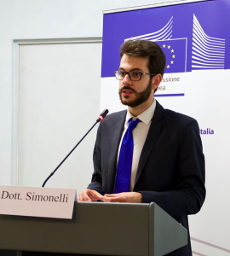
Filippo Simonelli
Title of the project: “The evolution of the European Union Public Diplomacy Strategy after the outbreak of the Ukraine War”
Supervisors: Francesco Olmastroni (Unisi, DISPOC), Nicholas Cull (University of South California)
Filippo Simonelli is a third year PhD student at the University of Siena. His main research interests include the European Union's Public Diplomacy, Digital Diplomacy and Public Opinion studies; his thesis' focus is devoted to the evolution of the European Unions' Public Diplomacy after the outbreak of the Russian invasion of Ukraine. He is also teaching assistant in the Public Diplomacy Course of Professor Olmastroni and researcher in the “Lessons learned? The past and future of Italian defense policy” PRIN project.
Further research activities include a position at the Istituto Affari Internazionali (IAI), where he covers Italian Foreign Policy and relationship between Italy and African countries under the framework of the Mattei Plan.
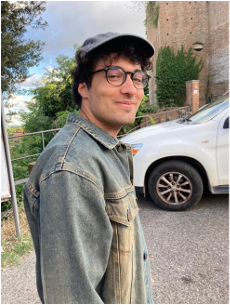
Domenico Maria Sparaco
domenicomaria.spa@student.unisi.it
Title of the project: “Sovereign bodies. An ethnography of a free-vax movement”
Supervisors: Armando Cutolo, Tiziano Bonini (Unisi, DISPOC)
Domenico Maria Sparaco is a PhD candidate in Social Sciences and Humanities at the University of Siena. His research focuses on the social and political dynamics catalysed by the COVID-19 pandemic, starting with his initial fieldwork in Codogno. This research culminated in his Master's thesis, which examined the impact of the COVID-19 lockdown on Codogno, the first area in Europe to be subjected to such restrictions. His current doctoral research is an ethnographic study of the "free-vax" movement(s) that emerged after the COVID-19 vaccination campaign. Sparaco's research focuses on the political and cultural links between these movements, Italian sovereignist currents, and various counter-cultural milieus.